



Z31 O2 Sensor (Exhaust Gas Sensor)

The exhaust gas sensor, or O2 sensor, is mounted in the exhaust and measures how much oxygen is left in the exhaust gas. The ECU uses that signal to fine-tune the fuel mixture, adding or removing fuel to stay close to the ideal air/fuel ratio.
The Z31 used two different types of O2 sensor, zirconium and titania. They work differently and are not interchangeable, so the sensor must match the ECU in your car.
Swapping ECUs? The ECU, O2 sensor and fuel injectors all have to match. See the ECU, O2 Sensor and Fuel Injector Interchange table before you buy parts.
Zirconium vs. Titania
| Zirconium | Titania | |
|---|---|---|
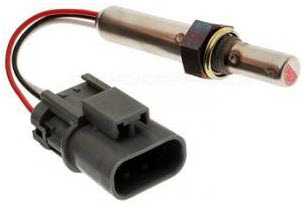
| Construction | A closed-end ceramic zirconia tube with porous platinum electrodes on the inside and outside. The outside touches the exhaust gas and the inside touches outside air. | A ceramic titania element held in ceramic alumina, exposed to the exhaust gas, with a heater built into the alumina. |
| How it signals | Generates its own voltage, about 0–1 volt, from the difference in oxygen between the exhaust and the outside air. | Changes its resistance with the oxygen content. The ECU reads that change as the signal. |
| Heater | None on the one-wire Z31 sensor; it relies on exhaust heat to warm up. | Yes, powered from the fuse block, so it reaches working temperature quickly. |
| Wires | One (signal) | Three (signal, heater power, ground) |
| Thread | 18 mm (spark plug size) | 12 mm |
Which Sensor Your Car Uses
| Year | Model | Sensor Type | Part Number |
|---|---|---|---|
| 1984–85 | Non-Turbo | Zirconium | 22690-09P01 |
| 1984–85 | Turbo | Zirconium | 22690-12P01 |
| 1986 | Non-Turbo | Titania | 22690-19P40 |
| 1986 | Turbo | Titania | 22690-19P20 |
| 1987 | Non-Turbo | Zirconium | 22690-09P01 |
| 1987 | Turbo | Titania | 22690-21P11 |
| 1988–89 | Non-Turbo | Zirconium | 22690-09P01 |
| 1988–89 | Turbo | Titania | 22690-21P11 |
U.S.-market cars. Verify part numbers before you buy.
- The sensor has to match the ECU, not just the year of the car. If your car has had an ECU swap, go by the ECU.
- To run a different sensor type, you have to rewire the harness and change the O2 sensor bung to the right thread size.
- On 1988–89 ECUs, the PROM chips can be swapped between non-turbo and turbo units, which lets a non-turbo ECU run a different sensor type. See the interchange page for details.
Common Problems
- Poor fuel economy
- Lean or rich surging at steady speed
- Check engine light with code 33 (exhaust gas sensor)
- Black smoke or a strong fuel smell (running rich)
- Failed emissions test
O2 sensors wear out with age, and they can be ruined early by oil burning, coolant leaks or silicone sealers that aren't marked sensor-safe. On cars this old, an original sensor is almost certainly past its useful life.
Troubleshooting
- Read the ECU trouble codes. Code 33 points to the exhaust gas sensor circuit. See Z31 ECU Codes.
- Fix any vacuum or exhaust leaks first. A leak ahead of the sensor lets in outside air and makes the sensor read lean.
- Check the connector and wiring for melted insulation, corrosion or broken wires. The sensor wire runs close to hot exhaust parts.
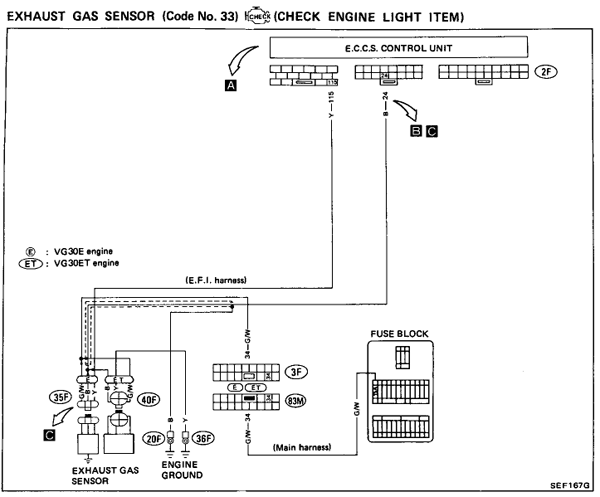
- Titania sensors: with the key on, check for 12 volts at the heater power wire (G/W from the fuse block), and check the fuse.
- Check the engine grounds. A poor ground affects the sensor signal the ECU sees.
- If the wiring checks out, replace the sensor with the correct type for your ECU.
Warning: do this work at your own risk. We are not responsible for any problems or damage caused by your own work.