
350Z (Z33) Warning Lights and Indicators
What each light in the 350Z's gauge cluster means, and what to do about it. Not every car has every light: some depend on the transmission, the body style, the options or the year. Where the lights changed over the run, it's noted.
The Start-Up Bulb Check
Set the parking brake and turn the key to ON without starting the engine. Most warning lights come on; some stay on, and others go out again after a few seconds. If one never comes on at all, its bulb or circuit may have failed, which also means it can't warn you. Have it repaired.
Most symbols shown are from our 370Z set, since they're the same standard symbols. The door, washer fluid, TCS off and cruise set symbols are from Nissan's 2008 350Z owner's manual.
Warning Lights
Where two symbols are shown, a car has one or the other depending on the market it was built for; US cars generally use the lettered version.
| Symbol | Light | What it means | What to do |
|---|---|---|---|
 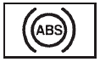 |
Anti-lock brake (ABS) warning Get it checked |
Comes on with the ignition and then goes out. If it lights while driving, the ABS has a fault and has switched itself off; the brakes still work, but without anti-lock. | Have the ABS checked. |
  |
Brake warning Stop safely now |
On with the parking brake applied. With the parking brake off, it means the brake fluid is low. If it lights together with the ABS light, the ABS may not be working. | Stop and check the brake fluid. If the level is below MIN or the light stays on, don't drive; the brakes may not work properly. Have it towed if in doubt. |
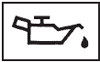 |
Engine oil pressure warning Stop safely now |
Oil pressure is low; flickering during normal driving counts too. It is not a low oil level light; use the dipstick for that. | Pull off safely and stop the engine right away. Running with this light on can ruin the engine almost at once. |
 |
Charge warning Stop safely now |
On with the engine running means the charging system isn't working, often a loose, broken or missing drive belt. | Stop and check the belt. Don't keep driving if it's loose, broken or missing, and have the car seen right away if the light stays on. |
 |
Supplemental air bag warning Get it checked |
Comes on with the ignition and goes out after about 7 seconds. If it stays on, flashes, or never comes on, the air bags or seat belt pretensioners may not work in a crash. | Have the air bag system checked as soon as possible. |
 |
Automatic transmission check warning (automatic) Get it checked |
Comes on with the ignition and then goes out. On while driving means the automatic transmission has a fault. | Have the transmission checked. |
 |
Low tire pressure warning (TPMS) Get it checked |
Later cars: a tire is low. If it flashes for about a minute at start-up and then stays on, the TPMS has a fault, or a wheel without a sensor, such as the spare, is fitted. It doesn't go out the moment you add air: drive above 16 mph (25 km/h) to reset it. On the 2003, where the system was optional, it lit for a flat or very low tire, with a chime for about 10 seconds. | Slow down, avoid hard braking and steering, and set the tires to the cold pressures on the door label. If it comes back on, a tire may be going flat. |
 |
Door open warning Fix when convenient |
A door or the rear hatch isn't fully closed with the ignition on. | Close it properly. |
 |
Low washer fluid warning Fix when convenient |
The washer fluid is low. | Top up the washer tank. |
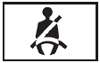 |
Seat belt warning Fix when convenient |
On until the driver's belt is fastened, with a chime. On later cars it also lights if the front passenger seat is occupied and that belt is unfastened. | Buckle up. |
Indicator Lights
| Symbol | Light | What it means | What to do |
|---|---|---|---|
 |
Malfunction indicator light (MIL, check engine) | On steady: an emission control fault, or a loose or missing fuel cap, or running out of fuel. Blinking: the engine is misfiring, which can damage the catalytic converters. On for 20 seconds then blinking for 10 with the engine off: the car isn't ready for an emissions inspection yet. | Steady: check the fuel cap and keep at least 3 gallons in the tank; it should go out after a few drives. Blinking: stay under 45 mph (72 km/h) and avoid hard acceleration and steep hills. Have it checked either way; no tow is needed. |
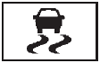 |
Slip indicator | On briefly at start-up. Blinking means VDC or traction control is working: you're near the limit of grip, so the road may be slippery. On together with the VDC off or TCS off light, with the system switched on, means that system has a fault. | Blinking: ease off. Fault: the car is still drivable, but have the system checked. |
 |
VDC off indicator (cars with VDC) | The VDC off switch has been pushed: stability and traction control are both off. | Push the switch again to turn VDC back on. |
 |
TCS off indicator (cars with traction control only) | Cars with traction control but no VDC: the TCS off switch has been pushed and traction control is off. | Push the switch again to turn it back on. |
 |
Cruise main switch indicator | The cruise control main switch is on, and the system is ready to use. | — |
 |
Cruise set indicator | Cruise control is holding a set speed. If it blinks with the engine running, the cruise system has a fault. | Blinking: have cruise control checked. |
 |
Transmission position indicator (automatic) | Shows the selected position in the tachometer. | — |
 |
Soft top indicator (Roadster) | On while the top is moving or stopped part-way. It goes out when the top is fully open, and flashes when it's fully closed until you latch it with the lever. Flashing at any other time with the ignition on means the top control unit may have a fault. | The top only moves with the car stopped, the brake pressed and the ignition on. Run the engine while using it, to save the battery. |
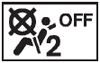 |
Front passenger air bag status light (later cars) | Lit when the occupant sensing system has switched the passenger front air bag off, depending on who or what is in the seat. | See the air bag section of the owner's manual for how the system decides. |
 |
High beam indicator (blue) | The high beams are on. | — |
 |
Turn signal and hazard indicators | Flash with the turn signals or hazard lights. | — |
Manual cars also have an up-shift indicator in the tachometer, which lights at the rpm you set in the trip computer (7,500 rpm from the factory). The trip computer shows its own warnings too, such as ICY for a low outside temperature and a low range warning.
Changes by Year
- Tire pressure: on the 2003 the tire pressure warning system was optional. It warned of a flat or very low tire, with a chime, and the trip computer could show all four pressures. The 2008 manual describes the later TPMS, which also warns of low pressure and flashes for a system fault.
- Soft top light: added with the Roadster, which arrived for 2004.
- Passenger air bag status light: listed in the 2008 manual but not the 2003, with the advanced air bag system and its seat sensor. The 2008 seat belt light also covers an unbelted front passenger.
- VDC or TCS: a car has one or the other depending on its trim, so it shows either the VDC off or the TCS off light.
Chimes
- Seat belt: about 6 seconds if the driver's belt isn't fastened.
- Key reminder: the driver's door is opened with the key left in the switched-off ignition.
- Light reminder: the driver's door is opened with the headlights on and the key out.
- Brake pad wear: a high-pitched scraping while driving, with or without the brake pressed, means a pad needs replacing. See brake wear limits.
More 350Z: owner's manuals · common problems · maintenance schedule · fluids · 370Z warning lights
Sources Used
- Nissan, 2008 350Z owner's manual, "Warning/indicator lights and audible reminders", rewritten in our own words. Read it here.
- Nissan, 2003 350Z owner's manual (the original lights and tire pressure warning system). Read it here.
- Symbols: XenonZcar collection, and Nissan's 2008 350Z owner's manual.
Spot a mistake? Tell us on the forum.